Dissection on Display: Cadavers, Anatomists and Public Spectacle

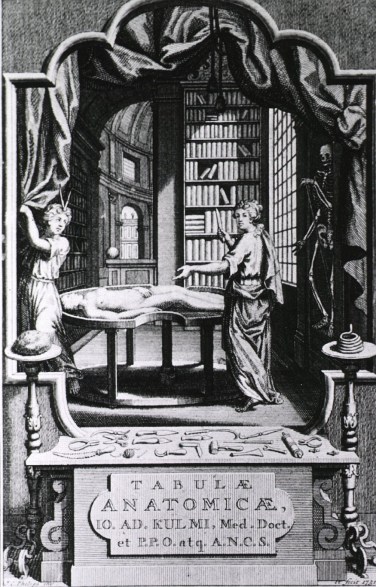
I’ve written a review of Christine Quigley’s new book, Dissection on Display: Cadavers, Anatomists and Public Spectacle, over at Morbid Anatomy. If you have more than a passing interest in the history of the study of anatomy, this book is definitely worth a look. Quigley’s earlier work (such as The Corpse: A History) was an inspiration to me, and I’m delighted to have been able to contribute to Morbid Anatomy. (Incidentally, if you know of other books that you’d like to see reviewed there, drop me a line.)


Frontispiece of Tabulae Anatomicae, 1755

Hot Chocolate Memento Mori

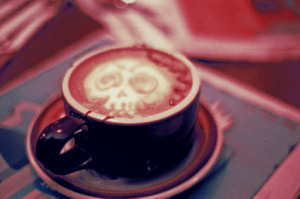
Deathly cocoa from Fremont Coffee
A toast to your health?

When it gets cold, there’s nothing I love more than thick, rich, creamy hot cocoa. It’s a treat, and I never kid myself thinking about “antioxidants” or such nonsense. I just enjoy the lingering effects of all that sugar in my system as I soldier on through yet another rainy Seattle afternoon.

Aside from the occasional addition of spice, until recently I didn’t think there was much beyond high-quality chocolate and milk that could make hot cocoa even better than it already is. I was wrong. If you want to make hot cocoa truly magnificent, add a SKULL, like my barista at Fremont Coffee did the other day.

Of course, my coffee shop Michelangelo wasn’t the first or last guy to do this — I had just never been lucky enough to see it before. (Go ahead and scoff, coffee connoisseurs!) In fact, a quick search on Flickr showed me that Fremont, and Seattle in general, knows no shortage of morbid coffee art.

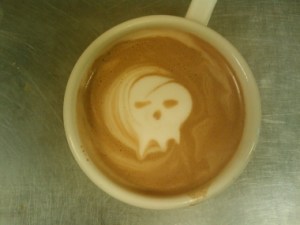
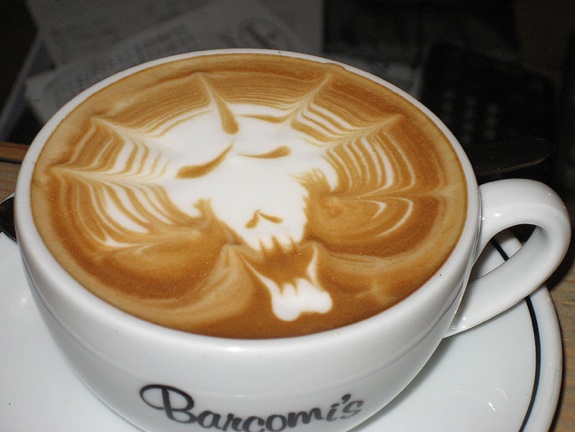
I posted this picture on Facebook, and people seemed to love it so much that I went searching for other skull-related pictures of coffee and cocoa. Here’s a little gallery, designed for people like me who enjoy a little memento mori with their morning caffeine. Kind of the ultimate “carpe diem” inspiration, don’t you think?

EviLatte shot by Karla Jean Davis
Skull and Bones latte art by Flickr user Alexa Baehr
Halloween cappuccino skull
Halloween cappuccino skull by Flick user Cafédirect
Skull by Dougesfeo from Ratemyrosetta.com
Latte Art Skull by Flickr user Drosche
Terrifying “Halloween spirit” latte art from Columbia River Coffee Roasters
Skull Java by Flickr user Drop Out Art
Sad Skull Latte by Adam Vrankulj
Latte by unknown genius

I’m not sure that last image qualifies as a skull (maybe it’s a Jhonen Vasquez latte?), but it was certainly odd enough for inclusion. Hey, this is my ridiculous blog, not yours!

For those who want to try this at home, here’s a little video from Montreal Caffe Java Art that shows you one technique. Pretty simple, actually! A more thorough write-up from RateMyRosetta is here. Or you could totally cheat and just use this cappuccino stencil.

Are you tea drinkers feeling left out? You could always drink your cuppa’ in this mug from CircaCeramics:

Skull cup from CircaCeramics

And stir it with these spoons from Pinky Diablo:

Skull spoons by Pinky Diablo

Or you could just use bone china — that’s creepy enough, especially if it’s made from, erm, human bones.

(Got more pictures of skull latte art and skull-themed coffee accessories? Send ’em my way!)

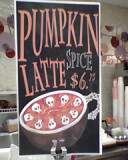
UPDATE: Alex Palmer, aka @LitMisc, sends this photo of a pumpkin latte with skull marshmallows from a Koreatown cafe in NYC:

My price is spine-tingling, at least

Remember That You Will Die

I’ve long been fascinated by memento mori, both the phrase and the objects. In Latin, memento mori means “remember you will die.” The phrase is usually associated with the Middle Ages in Europe, when it was fashionable to depict skulls, bones, and corpses in art and personal effects. The message behind these motifs was to encourage people to reflect and repent, to live holy lives, lest they be swallowed by the flames of hell –  always waiting around the corner for a new sinner to char.

At the Rubin Museum in NYC, a new show includes some stunning examples of memento mori, from bejeweled skull rings to an ivory bust of a Bohemian general missing half his face. But in a fascinating departure from gloomy Europe, the exhibit also includes objects representing Tibetan ideas of death and the afterlife. (The Rubin Museum is usually devoted to art of the Himalayas, presented in a serene little pocket of Chelsea.)

Ivory bust of General Wallenstein, Europe, after 1634, Science Museum London

The show is called Remember That You Will Die: Death Across Cultures, and indeed the objects represent a small survey of European and Tibetan ideas about the end of life. Europeans had skull rings, but the Tibetans had bone armor – a shawl woven of bone beads carved to look like skeletons. In various paintings on view, deities dance with the pearlized armor in a way that recalls the glittering props of belly dancers. Several other paintings show yogis meditating in charnel grounds, which were considered an ideal place to confront the fear of death. Two 18th century Tibetan bronzes depicts the Lord of the Charnel Grounds as a skeleton, dancing amid a ribbon of his skin. Also on display is a shin bone trumpet, and a hand drum decorated with images of human skulls and intestines. (For more great images, go to Morbid Anatomy.)

Skull pocket watch, Europe 1701-1900, Science Museum London. It's said Mary Queen of Scots carried a watch engraved with a skull as she paced the Tower of London awaiting news of her fate.

The objects from both parts of the world are a joy to view and contemplate. Buying a ticket, the admissions girl told me, “prepared to be scaaarrrreed!” as if I was entering a creepy funhouse ride. Yet the images didn’t scare me at all. They’re didactic, meant to teach a lesson. In both cultures, the lesson is intertwined with social control – behave properly, and you will avoid hell and bask in heaven. However, the wonderful thing about memento mori is that even as they compel the believer to look beyond this life, they also compel him or her to seize it. For the hedonist, that can mean embracing pleasures that religious authorities would prohibit, and in that sense memento mori are sweetly subversive.  For me, the objects are a call to penetrate the sleepiness of everyday life in order to cultivate a greater awareness of the moment. One of the most fascinating things about death is how it reinforces the preciousness of life. Looking at the objects on display, I am reminded of what Kafka said about literature – that it should serve as “an ax for the frozen sea within us.” The tug of these objects can serve a similar purpose.

Cowboy Outlaw

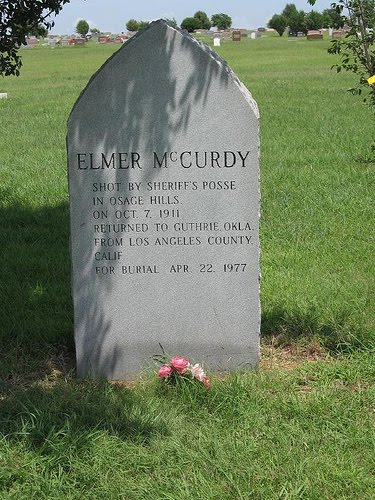
There’s always a moment in these stories where someone makes a really gruesome discovery. In the case of Elmer McCurdy, outlaw, that moment came in 1976, when a camera crew preparing for an episode of the Six Million Dollar Man accidentally dislocated Elmer’s arm, thinking he was a mannequin in an amusement park. True, he was spray painted day-glo orange, and was entirely dead, but Elmer had once been alive, and that’s no way to treat a former human.

Recently, my officemate Kevin filled me in on the details of McCurdy’s story, and a wonderful song that has been written in his honor. Here’s a rundown of the tale from The New York Times:

In December 1976 a very dead body was found hanging in a rundown Long Beach, Calif., amusement park ride called ”Laff-in-the-Dark.” The grotesque discovery was made during a location shoot for the television series ”The Six Million Dollar Man,” and though the glow-in-the-dark painted corpse had nothing to do with the plot, the irrepressible show business newspaper Variety headlined its story ”Bionic Man Meets Dummy Mummy.” Local officials quickly determined that the body in question was indeed a mummy, but not one from some ancient civilization. An autopsy revealed not only its American origin but also its all-too-American way of death: fragments were found of a bullet that had blasted its way diagonally through the torso to lodge in the left hipbone. Ticket stubs for a Los Angeles ”Museum of Crime” some yokel had slipped in its mouth, along with a corroded penny dated 1924, provided a starting place for investigators; they soon came up with the name of Elmer McCurdy, an Oklahoma outlaw who was killed by a posse in 1911 after a botched train robbery.

For the rest of the story, read the Times article or check out the summary on Snopes. If you’re really curious, there are at least two books on the subject. There’s also a lovely song, written by the inimitable Brian Dewan. An excerpt of the lyrics appears below:

He was sprayed a special color to help him look a fright,
And they hung him from a gallows ‘neath an ultra-violet light.
He hung there in a spookhouse for many, many years,
As youthful faces passed him by in tiny railroad cars.

Until one fine and fateful day in 1976,
He fell down from the gallows when the hangman’s noose unhitched.
His arm broke at the shoulder as he clattered to the floor
And the man who went to fix him was stunned by what he saw.

And the teenage boys did holler, and the teenage girls did faint,
When they saw the bone protruding from the varnish and the paint.
A coroner came to serve him and ran a slew of tests,
They found out who he was, in time, and laid his soul to rest.

(Photo by carletaorg on Flickr)


Where’s Moliére? The Mystery of Père Lachaise

Your final address matters most of all. Not the one where you breathe your last, but the one where your bones rest, where your name is engraved on stone. Of course, the irony is that you’ll no longer be there to care, but the terror of that thought makes the location feel all the more crucial. People who sell plots in cemeteries – the scholar Frederick Brown calls them “metaphysical realtors” – are aware of this anxiety, and often seek to exploit it.

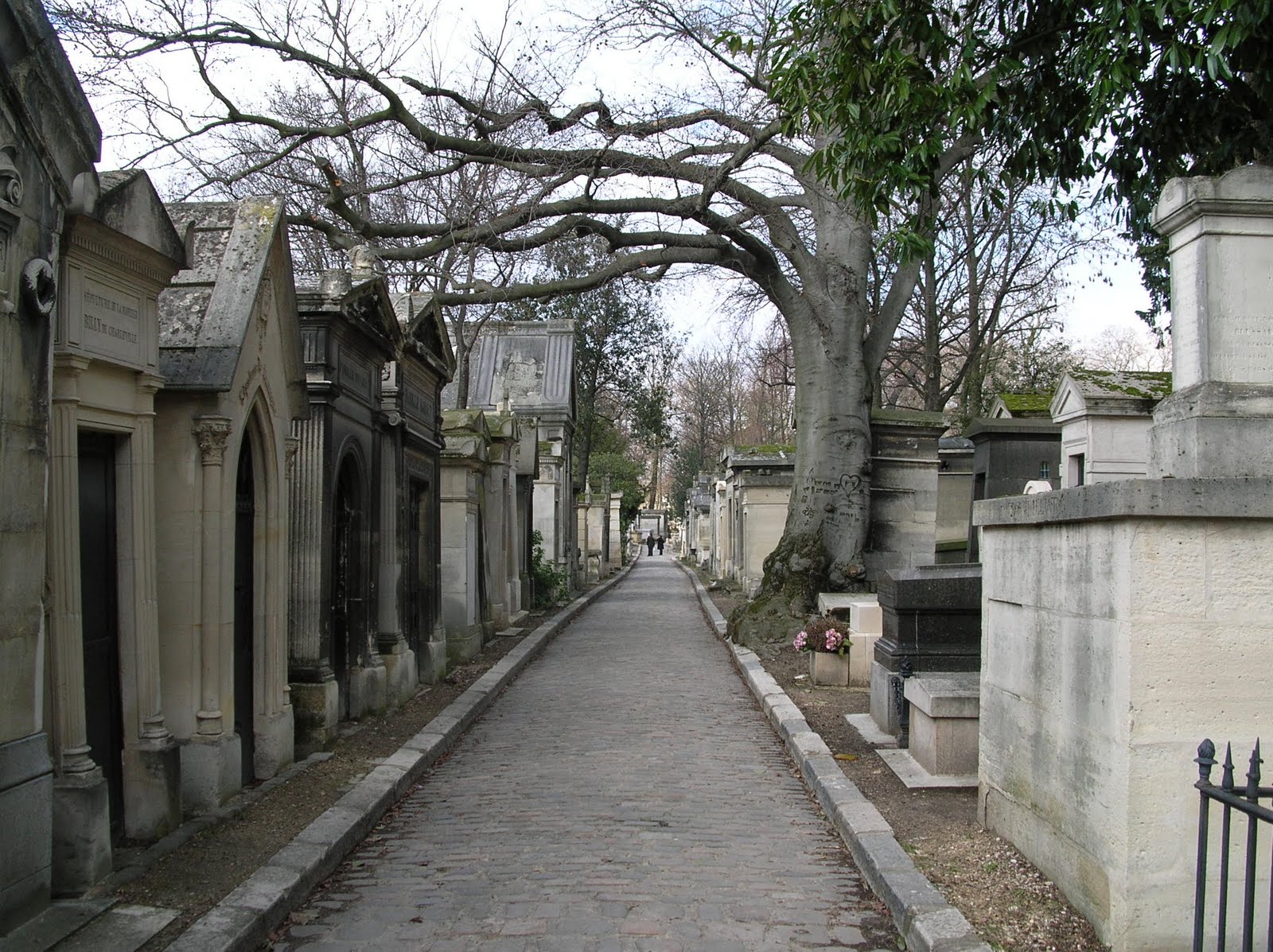
Lately I’ve been reading Brown’s 1973 book, Père Lachaise: Elysium as Real Estate. Père Lachaise, of course, is a sprawling village of the dead in Paris’s 20th arrondissement, home to some of the most famous graves in the world – Jim Morrison, Sarah Bernhardt, Oscar Wilde. Wikipedia says it’s the most-visited cemetery in the world, which is easy to believe. When I visited in February 2010, men half-crazed with cold sold tourist maps outside the entrance (despite the free ones inside) to a steady stream of young art students, couples, and tourists from around the world. I hear that in the spring the place is even more crowded, with both tourists and hundreds of resident cats.
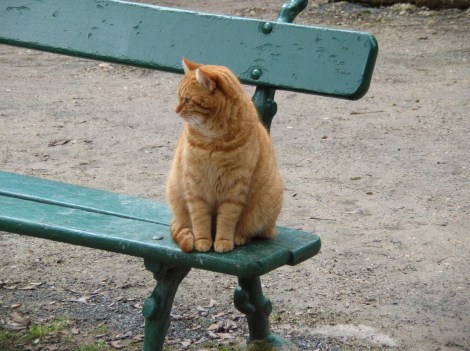
Moliére and the cats of Père Lachaise

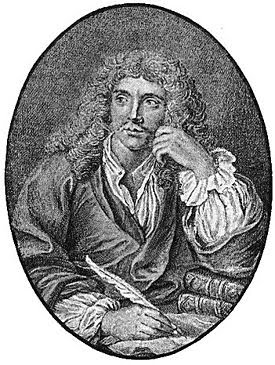
For the purpose of this blog, Moliére (1622-1673) is my favorite resident of Pére Lachaise. A famed actor and playwright in his day, he had the singularly ironic fate of  going into his death throes while on stage playing the part of an ill man. He’d written the part himself, in a play of called The Unfortunate Invalid. When he fell ill, the audience had no idea Moliére was actually suffering, and thought his twitches were part of the act. He died, of a lung hemorrhage, about an hour after stepping offstage.

In the bad old days, actors were denied a Christian burial. Fortunately, Moliére’s resourceful widow pulled some strings, and got permission for a night burial in the cemetery of St. Joseph. Details of the precise burial location are sketchy: some say he was buried in a consecrated grave “at the foot of the cross,” others that he ended up in a corner of the graveyard set aside for suicides. Sources are even more divided about what happened in the years that followed: some say he was moved inside the church, others that his body stayed out in the yard.

What we know for certain is in 1792, the revolutionary government decided to name a section of town after Moliere, and went in search of his bones. By that time, no knew for certain where he lay. That didn’t seem to bother the commissioners in charge of his exhumation, who dug in what seemed to be promising spot and labeled the resulting skeleton “Moliere.” Afterward, the bones went to a museum, where they lay for about 18 years, until the man behind Pére Lachaise needed a corpse to be part of the founder’s circle.

Like PR people today, the promoter behind Pére Lachaise, Prefect of the Seine Nicolas Frochot, knew that the presence of celebrities would enhance the desirability of his product. He had a job on his hands convincing Parisians to bury their departed in the eastern suburb where Pére Lachaise lay. They were used to burying their dead in city churchyards, and the idea of a far-flung cemetery seemed a little weird. Because Moliere was so beloved, reburying him in Pére Lachaise seemed like an ideal way to convince the French bourgeoisie that the cemetery was the “in” place to spend eternity. Of course, Frochot had no idea the bones may well have belonged to a pauper or suicide, but he may not have cared. In Père Lachaise: Elysium as Real Estate, Brown says,

“…judging from their haste, one may presume that they cared no more whether these were the real bits of Moliére and La Fontaine than did the Church whether its saints’ relics were historically true. Myths suffice when any bones will do, and any bones, in turn, will serve a myth–in this case a myth still current in France, which has it that her writers, forming a national treasure, mystically belong to her bourgeoisie, however dull and ill-read.”

The move paid off. Today, many of the tourists who pass Moliere’s grave probably don’t know who he is. They’re on their way to throw flowers at Jim Morrison, or plant a lipstick kiss on Oscar Wilde’s grave. But if it weren’t for the bones of the fake Moliere, they might not be there at all, and the Parisian tourist industry would definitely suffer.
Moliére and the cats of Père Lachaise
MeKissingWildesGrave
Moliére and the cats of Père Lachaise